 GISTM.ai Conformance platform
The conformance dossier of a tailings facility, built by people and accelerated by AI
GISTM.ai is a multi-tenant platform for managing conformance with the 77 Requirements of the Global Industry Standard on Tailings Management. Compliance teams build the facility dossier over months, with approval governance and full traceability. The AI accelerates when asked, and never decides.
Open GISTM.ai
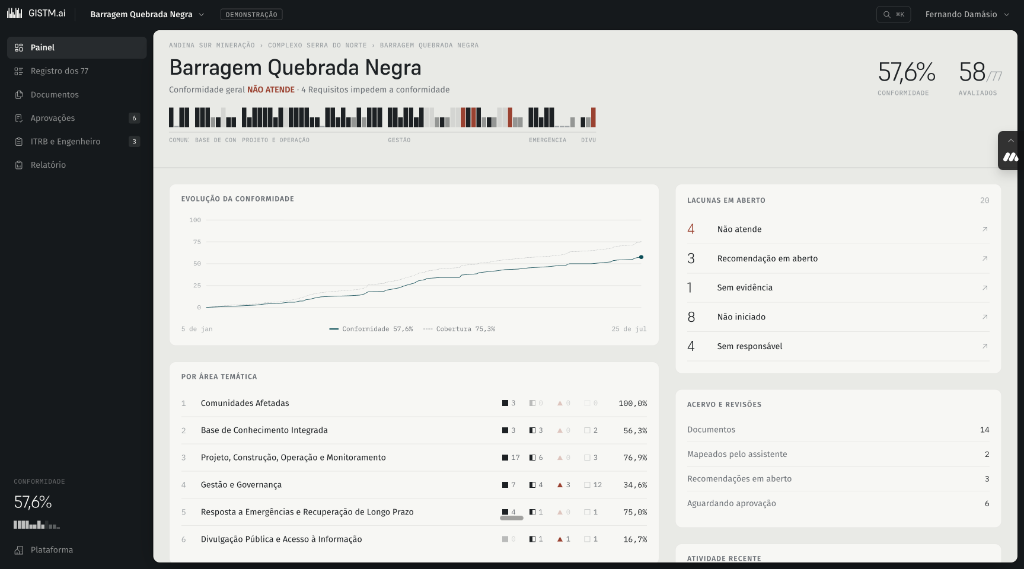
The platform runs in its own dedicated window, with the full screen at its disposal.
Open in a new windowPublic product specification · Rev. 2026.1
What GISTM.ai is
A multi-tenant platform for managing conformance with the 77 Requirements of the Global Industry Standard on Tailings Management. It is not an audit generator and not a questionnaire. Compliance teams build the facility dossier over months, with approval governance and full traceability. The AI accelerates when asked, and never decides.
The entire interface is in Brazilian Portuguese, using the official ICMM translation terminology — the terms on screen are the terms an auditor will use. A ⌘K command palette navigates between Requirements, pages and facilities.
The six thematic areas
Every one of the 77 Requirements belongs to one of six areas. The areas organise the register, the dashboard decomposition, the report and the Coluna de Testemunho.
- Comunidades Communities
- Base de conhecimento Knowledge base
- Projeto e operação Design & operation
- Gestão Management
- Emergência Emergency
- Divulgação Disclosure
The five verdicts
A Requirement carries exactly one verdict. Each verdict has its own glyph shape — never a colour code — so the register stays readable in print, in greyscale and to colour-blind users.
Atende
Conforms · weight 1
Atende Parcialmente
Partially conforms · weight 0.5
Não Atende
Does not conform · weight 0 · deficiency
Não Aplicável
Not applicable · out of the denominator
Não Avaliado
Not assessed · counts against Cobertura
§01
Five access levels
Access is a governance instrument, not a convenience. The five levels separate who assesses from who ratifies, which is what makes the Conformidade score defensible in front of an auditor.
| Level | Sees and does |
|---|---|
| Admin da Plataforma | Sees and edits everything, across all companies. Creates companies and invites their first users. The only level that can reset the demo tenant. |
| Admin da Empresa | Manages their own company's facilities, users and Requirement owners. Cannot see any other company. |
| Avaliador | Assesses Requirements, attaches evidence and submits the work for approval. Cannot approve their own submission. |
| Aprovador | Ratifies or returns submissions, with a comment. Can also assess. |
| Leitor | Read-only access to dashboards and reports. No write path of any kind. |
Invite only
There is no public sign-up. An administrator invites by email address. The person enters the same address and receives a six-digit code by email or SMS. The session then persists in the browser, so day-to-day work does not mean logging in again.
An identity-verified user with no pending invite does not get an error — they get a screen that explains how to request access.
Isolation is checked on every call
Every facility-scoped server method confirms that the facility belongs to the caller's company before doing anything else. Isolation is not a filter applied to a query — it is a precondition of the method.
An identifier belonging to another tenant returns exactly the same response as a non-existent identifier. Nothing in the response confirms that the other facility exists.
Deployment, hosting and provider controls are documented separately in the Trust Center.
§02
The living register
There are no assessment rounds that start and end. Each facility has a permanent register of the 77 Requirements, created at the moment the facility is created, evolving continuously from then on. Conformance is a state the facility is in, not an event it went through.
Four states per Requirement
The verdict answers how conformant. The state answers how far through governance. Flow state is encoded by opacity, never by hue.
Não iniciado
Open in the register, nobody has worked it yet.
Em elaboração
An Avaliador is writing the rationale and attaching evidence.
Em aprovação
Submitted. It sits in the Aprovador's queue awaiting a decision.
Aprovado
Ratified. Only now does it count towards the official number.
Two scores accompany the facility
57,6%
Conformidade
Weighted percentage over the applicable Requirements, counting only approved assessments. Atende weighs 1; Atende Parcialmente weighs 0.5.
75,3%
Cobertura
How many of the 77 Requirements already have a defined verdict — the honest answer to "how much of the dossier exists at all".
Proposed work appears dimmed on screen but does not move the official number. This is the single most important behaviour of the register: nobody can raise the score by proposing something. Only an Aprovador moves it.
A timeline shows the evolution of both scores since the register was opened, so the story of the dossier is legible without reading a single Requirement.
Independence notice · GISTM.ai supports the operator's own conformance management. It does not constitute, replace or simulate an independent audit, an ITRB opinion or an Engineer of Record determination.
Coluna de Testemunho
The whole facility in 692 × 30 pixels: 77 cells grouped by the 6 thematic areas. Cells fill as work is ratified, so the page darkens over the months. Deficiency is the only thing that carries Óxido; flow state is carried by opacity.
§03
Approval governance
The Avaliador works the Requirement and submits it. The Aprovador sees a dedicated queue in which the proposed rationale is presented as a diff against the official one, and either approves it or returns it with a comment.
Batch approval exists because teams genuinely ratify several Requirements at once, and forcing one decision per screen would push people to approve without reading.
Owner and deadline per Requirement
Each Requirement has an owner and a deadline. Overdue items appear flagged in the register table and on the dashboard — a deadline nobody sees is not a deadline.
Immutable per-Requirement history
Every event enters an immutable history attached to the Requirement: who attached what, who proposed, who approved, when, and with what comment. Nothing in the product edits or deletes a history entry.
- Assistente sugeriu Atende Parcialmente — suggestion only, no status change.
- Maria Silva anexou evidência.
- Maria Silva propôs Atende Parcialmente.
- Vinculado à recomendação ITRB-2026-07.
- Rafael Teixeira aprovou Atende Parcialmente — the score moves here, and only here.
§04
Documents and optional AI mapping
At upload there is an explicit choice, unchecked by default: map this document with the assistant, or not. The default is the conservative path, because a team that has not decided yet should not have AI output appearing inside its dossier.
The library, and nothing more
The document is stored and its text extracted. The team links it manually to the Requirements it supports. This is a document library with evidence pointers — no inference of any kind.
The assistant reads against the 77
The assistant reads the document against the 77 Requirements and writes a suggestion in each one it addresses, containing a candidate verdict, quotable excerpts and perceived gaps.
A suggestion sits beside the Requirement. It is not the Requirement.
The four guardrails, stated plainly
A suggestion never becomes status. A human must adopt it as a proposal before it can enter the approval queue — and then it still needs an Aprovador.
The assistant never writes a verdict. It writes a candidate verdict inside a suggestion; the field that counts is only ever written by a person.
The assistant never overwrites a Requirement someone has already worked. Human work is not a draft the model is allowed to improve.
Nothing is saved when the model does not return valid structure. A malformed response is discarded, not salvaged into a partial suggestion.
A IA acelera quando solicitada, e nunca decide.
The AI accelerates when asked, and never decides.
Deleting a document removes the evidence pointing to it. Evidence is a claim about a document; when the document is gone the claim cannot be allowed to survive it and quietly hold up a verdict.
§05
ITRB and Engineer of Record recommendations
Recommendations issued by the Independent Tailings Review Board and the Engineer of Record get their own module. They are not attachments to a Requirement — they are governance objects with their own life cycle, and they are usually the reason a Requirement moves at all.
| Field | Content |
|---|---|
| Origin | ITRB or Engineer of Record. |
| Issuer reference | The identifier used by the issuing body itself, so the two records can be reconciled. |
| Review cycle | Which review the recommendation came out of. |
| Full text | The recommendation as written, not a summary of it. |
| Owner & deadline | Accountability, on the same model as the Requirements. |
| Action plan | Items and their conclusions. |
| Requirements touched | The GISTM Requirements affected — a bidirectional link: from the recommendation you reach the Requirements, and from a Requirement you see every recommendation bearing on it. |
Four situations
Aberta
Received, nothing under way. Counts as an open gap.
Em atendimento
Action plan running, items in progress.
Atendida
Plan concluded and the conclusion recorded.
Superada
Overtaken by later events — closed honestly rather than marked done.
§06
Dashboard, gaps and report
The dashboard shows both scores, the timeline, the decomposition by the six thematic areas, the open gaps and recent activity. Nothing on it is a vanity metric: every number on the page is one an auditor can ask you to defend.
Gaps are detected automatically, in six categories
A gap is not only a failed Requirement. Five of the six categories are about the dossier being incomplete or unowned — which is what actually sinks an audit.
- A Requirement assessed as Não Atende.
- A Requirement not started.
- A Requirement assessed with no evidence attached.
- An overdue deadline.
- A Requirement with no owner.
- An open recommendation from the ITRB or the Engineer of Record.
The report is audit-format and printable
| Section | Contents |
|---|---|
| 01 | Facility cover. |
| 02 | Both scores — Conformidade and Cobertura. |
| 03 | The density column. |
| 04 | Verdict distribution. |
| 05 | Conformance by thematic area. |
| 06 | The state of each of the 77 Requirements, with the recorded rationale. |
Every page and every report carries the independence notice. GISTM.ai supports the operator's own conformance management. It does not constitute, replace or simulate an independent audit, an ITRB opinion or an Engineer of Record determination.
§07
Ten screens
The whole product is ten screens. That is deliberate: a conformance team should be able to hold the entire application in their head.
- 01Entrada
- 02Acesso ainda não liberado
- 03Painel
- 04Registro dos 77
- 05Documentos
- 06Aprovações
- 07ITRB e Engenheiro
- 08Relatório
- 09Administração
- 10Plataforma
⌘K command palette
The palette navigates between Requirements, pages and facilities. In a register of 77 items consulted daily for months, search is the primary navigation and the menu is the fallback.
- Requisito 5.2 · Projeto e operaçãoEm aprovação
- Aprovações · fila6 pendentes
- Barragem Quebrada NegraInstalação
§08
Data and operations
Ten tables and thirty-two server methods. The shape of the data is the shape of the governance: the register, the history and the timeline are separate tables precisely because history must never be a derived view of current state.
| # | Table | Holds |
|---|---|---|
| 01 | empresas | The tenants. |
| 02 | usuários | People and their access level. |
| 03 | instalações | The tailings facilities. |
| 04 | os 77 Requisitos | Global reference data, shared by every tenant. |
| 05 | os registros de conformidade | The living register: verdict, state, owner, deadline, rationale. |
| 06 | o histórico imutável | Append-only events per Requirement. |
| 07 | os pontos da linha do tempo | Score snapshots over time. |
| 08 | os documentos | The library, extracted text and evidence pointers. |
| 09 | as recomendações | ITRB and Engineer of Record records and their action plans. |
| 10 | os convites | Pending invites and their codes. |
What the surface covers
Session and invites · the register and Requirement detail · assessment and evidence · the approval queue · promotion and discard of suggestions · the document library · the recommendations module · facility creation · company and user administration · demo reset.
Every facility-scoped method begins by confirming the facility belongs to the caller's company.
Demo reset, fenced in
A daily job at 05:00 UTC resets the demo company to its initial state. Its scope is restricted to the tenant flagged as demo; no client data is touched; and it aborts if that flag does not exist rather than falling back to a broader scope.
The same reset is available as a manual button for the Platform Admin.
§09
The demo
Andina Sur Mineração operating Barragem Quebrada Negra — both fictional — in Minas Gerais. High Consequence Classification, iron ore, facility in operation. The demo is deliberately mid-journey, because an empty product and a finished product both hide how the work actually feels.
34
Atende
15
Atende Parcialmente
4
Não Atende
5
Não Aplicável
19
Pendentes
57,6%
Conformidade
75,3%
Cobertura
6
Proposals awaiting decision
5
Requirements in elaboration
4
Assistant suggestions awaiting a human
14
Documents
5
ITRB / EoR recommendations
189
History events
59
Timeline points
Instalação recém-aberta
A second scenario shows exactly what a new client finds on day one: the 77 Requirements open, nothing assessed, an empty library. No seeded score, no sample verdicts — the honest starting point.
§10
Design system · Testemunho
Testemunho is the geotechnical term for a drill core sample and, simultaneously, the Portuguese word for documentary proof. Both meanings are the product: a vertical record extracted from the ground, and evidence given under responsibility.
Two chromas in the whole system
Prumo
#0C4F58
Everything interactive. Links, controls, ratified cells, both scores.
Óxido
#9A4230
Exclusively deficiency. Nothing decorative is ever allowed to borrow it, so when it appears on screen it means one thing.
Shape carries verdict, opacity carries flow
Verdict is encoded by glyph shape, not colour: filled square = Atende · half-filled square = Atende Parcialmente · triangle = Não Atende · dash = Não Aplicável · empty outline = Não Avaliado.
Flow state is encoded by opacity, which is why proposed work can look present-but-provisional without inventing a sixth colour.
A dark frame with a light sheet floating inside
The frame is the platform. The sheet is the client's data. Everything the operator authored sits on paper; everything the software contributes stays in the frame. You can always tell which is which.
Typography
Conformidade
Atende Parcialmente — revisão anual não evidenciada.
ITRB-2026-07 · 2026-04-02
The Coluna de Testemunho, again
One artefact carries the identity of the whole system: 692 × 30 pixels, 77 cells, 6 groups. It is on the dashboard, in the report and in the palette results. As work is ratified the cells fill, and the page darkens over the months — the core sample being drawn out of the ground.
Independence notice · carried on every page and every report of the product.
GISTM.ai Report Examples
Reports generated by GISTM.ai from public disclosures of major global mining companies. Each example shows how the platform maps the 77 GISTM Requirements against publicly available evidence on the web — using the same register, the same verdict vocabulary and the same audit-format report described in the specification above.
Tier 1 Mining Operator · A
GISTM conformance assessment built from public disclosures of one of the world's largest diversified miners.
View report on GISTM.aiTier 1 Mining Operator · B
Comprehensive conformance analysis built from public evidence on the tailings facilities of a South American iron ore operator.
View report on GISTM.aiTier 1 Mining Operator · C
Assessment covering tailings management practices of a global integrated operator across copper, platinum and industrial metals.
View report on GISTM.aiTier 1 Mining Operator · D
Conformance review and gap analysis built from public disclosures of an Asian copper, zinc, gold and base-metals operator.
View report on GISTM.aiAll reports are generated from public sources only. Explore the full set on GISTM.ai
Deployment and security
How the platform is delivered, and the limits we commit to in writing.
Three delivery modes
Managed SaaS; a private AWS account owned by the client; or — case-by-case under technical assessment — on-premises with the customer's own AI stack (vLLM, Bedrock VPC endpoint or Azure OpenAI). On-premises requires a discovery scope, as it depends on the customer's infrastructure and supported model providers.
Tenant-scoped improvement only
When a human adjusts an assessment, that feedback is incorporated as agent configuration — prompts, retrieval rules, few-shot examples — scoped to the customer's workspace. It does not train the foundation model and never affects another tenant. Customers can revoke, export or delete this configuration at any time. See the controls in the Trust Center.
Responsible benchmarking
Industry comparisons are built exclusively from aggregated, anonymised public data (public GISTM/TSM/Copper Mark reports, ANM, ICMM, IRMA datasets) and/or client data expressly authorised by contract, always anonymised at site level. See the rule in the Trust Center.
See the register on your own facility
Open the demo facility in a new window, or ask us to walk you through the register, the approval queue and the audit-format report against one of your own tailings facilities.
Featured cases powered by GISTM.ai
Real engagements where GISTM.ai moved tailings governance from periodic audits to continuous, evidence-based assurance.

GISTM.ai — AI platform for tailings compliance
The flagship case: from periodic audits to continuous assurance across the 77 GISTM Requirements.
Read case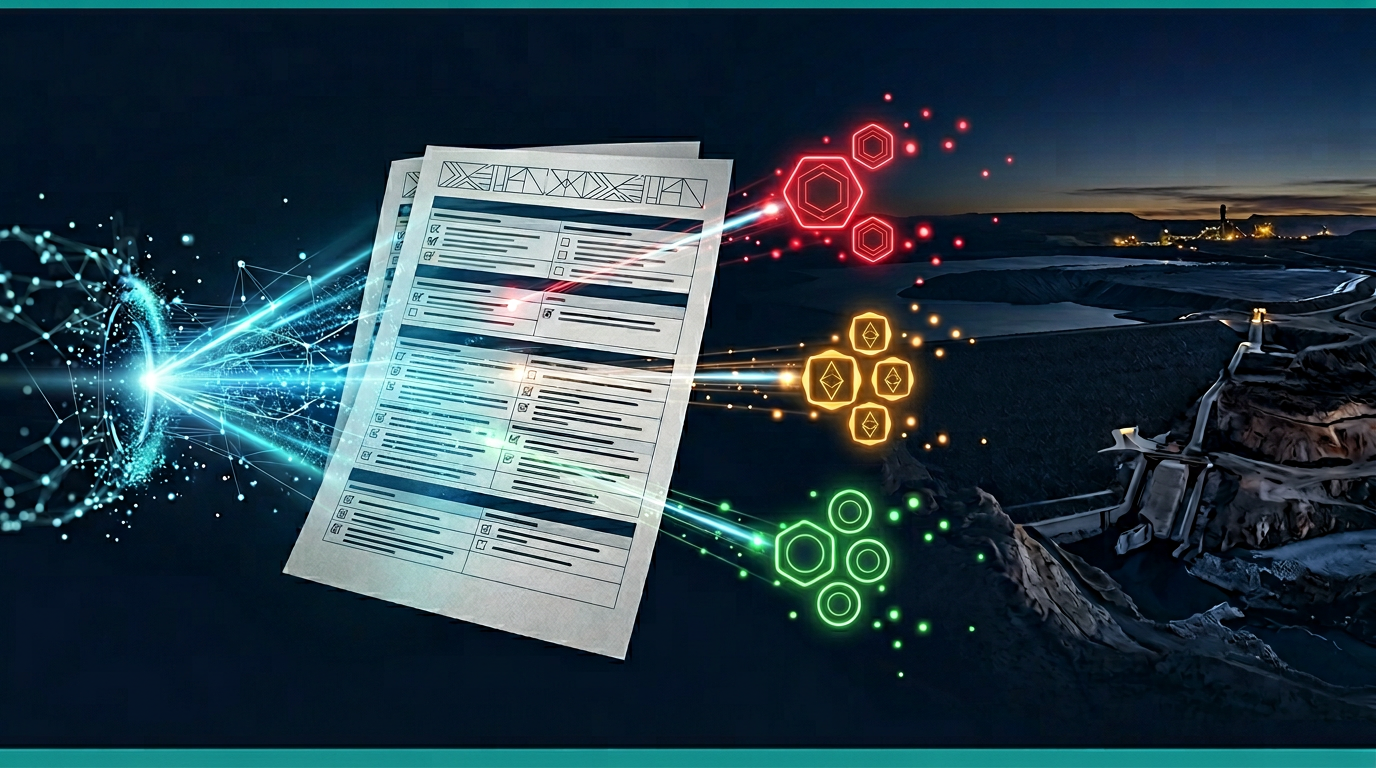
AI-assisted GISTM audit & gap identification
Prioritized gaps, traceable evidence and actionable recommendations produced with GISTM.ai.
Read case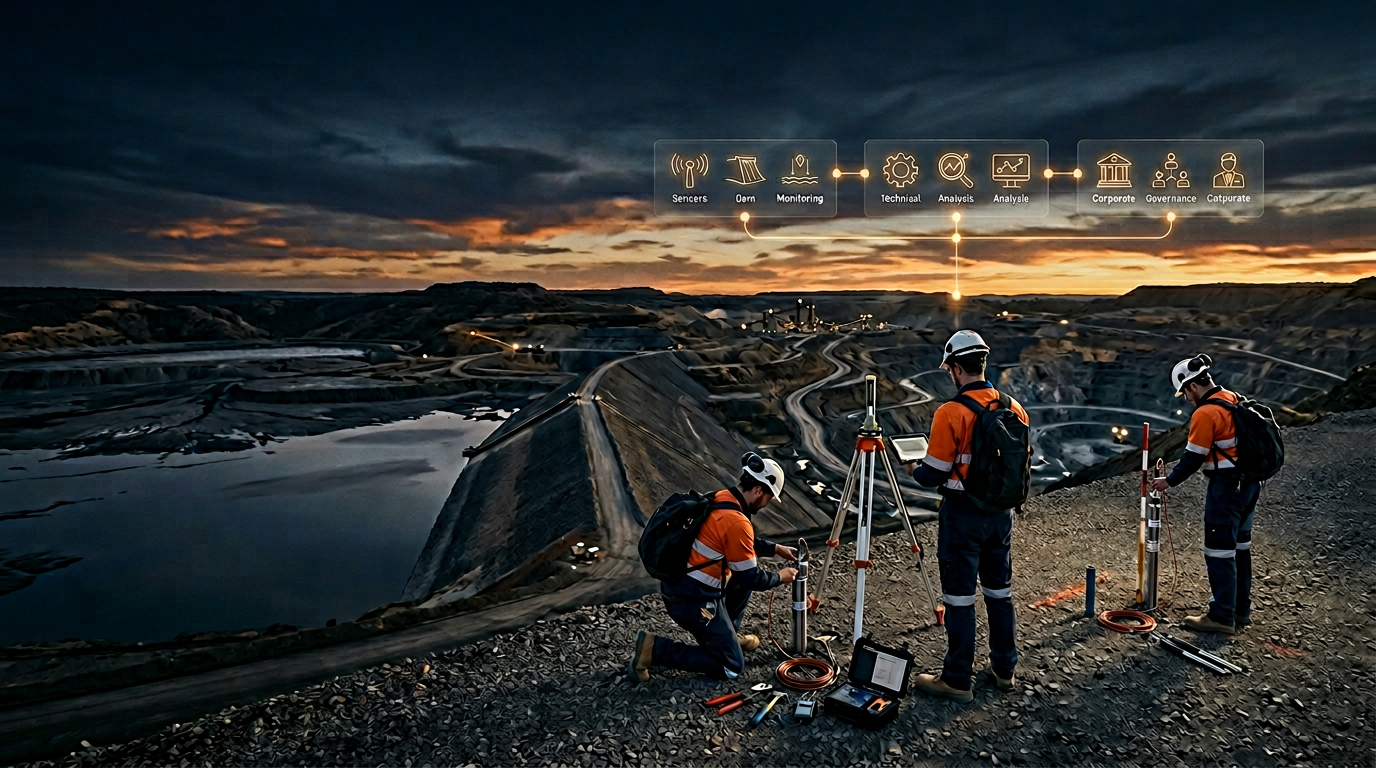
Corporate geotechnical governance redesign
Five phases, twelve deliverables and a change roadmap for corporate geotechnics.
Read case
Reliable Assurance framework & Health Index
Six components of a living assurance system with a monthly executive cadence.
Read case